Mr. Ramsay and Cam’s Relationship
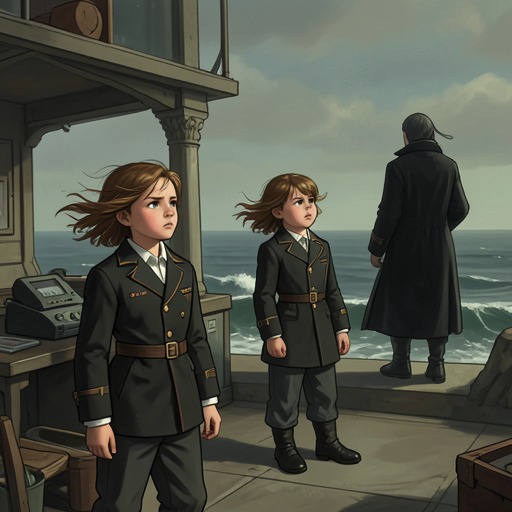
To the LighthouseMr. Ramsay and Cam’s Relationship develops through a contradiction that neither affection nor anger can resolve: Cam resents her father’s authority, yet feels drawn to his intelligence, manner, and care. On the boat to the Lighthouse, she and James renew a compact to resist him, but the voyage also gives Cam moments of pride, safety, and tenderness toward her father. Their bond changes in perception rather than reaching a simple settlement: Cam can recognize his kindness and still remain unwilling to surrender her independence.
Family Care and Cam’s View of Her Father
Cam’s relationship with her father is framed by the family’s earlier life at the summer house, where Mr. Ramsay’s authority could feel oppressive but where he was also part of a domestic world that offered her room to think. Remembering his study, Cam recalls him writing beside another older man as copies of The Times rustled nearby. She had sometimes come in from the garden with a book, and her father might gently ask whether there was anything he could give her. In this memory, his presence does not interrupt her inward life; it helps make her feel safe enough to let her thoughts expand.
That recollection matters because Cam’s view of Mr. Ramsay is never simply the one James insists upon. On the boat, she watches her father absorbed in a small book with a worn, rounded cover. She knows the neat personal accounts written on its flyleaf, including the cost of a dinner and the amount given to a waiter, but cannot know the thoughts held within it. His concentration suggests a mind at work, laboring through difficulty rather than merely demanding attention. Cam wants James to look and recognize what she sees: the same man who can be sarcastic and tyrannical can also be absorbed, private, and gentle toward her.
Authority, Memory, and the Compact
The immediate conflict on the voyage is shaped by the children’s sense that Mr. Ramsay has compelled them to come. Cam and James feel burdened by his gloom and authority, and they renew their resolve to resist tyranny. To Cam, their father’s insistence that they carry parcels and participate in his chosen outing has spoiled the day’s pleasure. The boat’s speed briefly offers an alternative: she and James exchange a look and feel the excitement of escape, imagining that they might land somewhere and be free.
The compact becomes especially difficult when Mr. Ramsay turns from the island and tries to draw Cam into conversation. After she cannot identify the points of the compass, he teases and half-scolds her for her vagueness. He thinks he can make her smile by asking about the family puppy, and asks who is looking after it. James reads the exchange as a test Cam is about to fail: he expects her to yield and leave him alone in their resistance. For Cam, however, answering is not merely a choice between obedience and defiance. She wants to offer her father a private sign of affection without betraying her brother’s trust, and cannot find a way to do both.
The name of Mr. Ramsay’s childhood dog, Frisk, briefly opens a path toward that private connection. Cam wants to respond warmly and even to ask whether Frisk was the dog that found its way over the moor alone. Yet she says nothing. Her silence is not proof that she feels no love; it registers the difficulty of expressing that love while James watches and the compact remains binding. The scene makes the relationship’s central division intimate: Cam is not choosing between loving her father and opposing him, but trying to hold both loyalties at once.
The Injury of Command and the Pull of Affection
Cam’s resistance rests on memories more serious than this day’s irritation. Her father’s dominance has, she feels, poisoned her childhood and left her waking at night with anger at old commands. His repeated demands that she submit are part of what makes the compact with James morally important to her. She reveres justice and sees James as defending it, even while she recognizes that her father is asking for care and forgiveness rather than simply issuing an order.
At the same time, Cam is powerfully attracted to Mr. Ramsay. She admires his hands, feet, voice, words, haste, temper, oddness, and passion, as well as the starkness with which he speaks of human loneliness. She regards his emotional intensity and remoteness as part of the same compelling person. This attraction does not erase the damage she associates with his authority, and the novel does not turn affection into an easy cure. Instead, Cam’s divided response gives the relationship its emotional force: the person she resists is also the person whose presence can reassure and move her.
The Voyage and a Changed Balance
The sea intensifies Cam’s divided feelings. As the boat moves, its speed absorbs her attention and briefly loosens the tie between her and James. She imagines release, but the need to maintain their compact remains. Her father, meanwhile, listens intently to Macalister recounting a storm in which ships sought shelter and men struggled to bring a vessel out past the point. Cam sees Mr. Ramsay respond with excitement to the account of labor against wind and waves. She can imagine him acting bravely in such circumstances and feels proud of him, even as she remembers that he has forced the children into a journey undertaken partly for his own satisfaction.
Later, Mr. Ramsay shares sandwiches with the fishermen and appears happy among them. Cam sees him stop her from throwing away a sandwich, telling her to return it to the parcel if she does not want it. The correction could recall his authority, but its circumstances change its meaning: he is thinking about the fishermen’s practical life, and after Cam obeys he offers her a gingerbread nut from his own parcel with conspicuous courtesy. She feels safe enough to think freely because he is there keeping an eye on her. The moment joins restraint to generosity, showing that his care may arrive in the same encounter as his command.
A Relationship Without Simple Reconciliation
Cam’s relationship with Mr. Ramsay changes as she sees more than one aspect of him at once. Her memories of his gentleness in the study and her observation of his absorption in the boat complicate James’s account of him as only a sarcastic brute and tyrant. His courteous gift and attention to her safety likewise make affection tangible. Yet Cam does not abandon her judgment: the old commands remain intolerable, and she still withholds the response her father hopes to draw from her.
The relationship therefore reaches no clean resolution in these scenes. Cam’s silence preserves her resistance, while her attention, pride, and sense of safety reveal attachment. Mr. Ramsay can be both a source of pressure and a person Cam loves; Cam can recognize his kindness without submitting her own judgment to him. Their bond is presented as a continuing negotiation between authority and independence, with the voyage bringing its tenderness into view without making the conflict disappear.